
Sensory Retraining for Motor Recovery - Introduction to Cognitive Multisensory Rehabilitation (CMR)
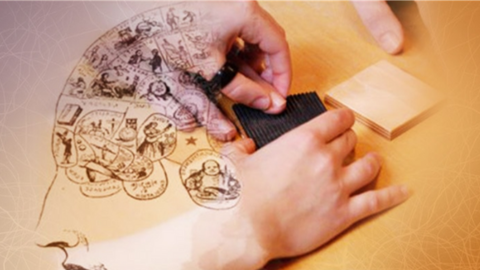
Sensory Retraining for Motor Recovery - Introduction to Cognitive Multisensory Rehabilitation (CMR)
This course includes
The instructors
Overview
Somatosensory input is fundamental to human movement. Every purposeful action - from reaching and grasping to precise object manipulation - depends on the integration of sensory perception, cognitive processing, and motor execution. When somatosensory function is impaired, motor recovery is significantly compromised.
This Embodia course, Sensory Retraining for Motor Recovery: Introduction to Cognitive Multisensory Rehabilitation (CMR), presented by Marc Aureli Piqué Batalla, introduces clinicians to the principles, clinical evidence, and practical application of Cognitive Multisensory Rehabilitation (CMR).
Grounded in the cognitive therapeutic exercise framework developed by Carlo Perfetti, CMR integrates sensory discrimination, attention, memory, and body representation to drive meaningful neuroplastic change. This course explores how CMR differs from traditional motor-focused approaches and how it can be applied across neurological, orthopedic, and chronic pain populations.
Clinicians will gain a deeper understanding of how sensory impairments influence motor dysfunction - and how targeted cognitive-sensory retraining can enhance functional outcomes.
Learning Objectives
By the end of this course, participants will be able to:
-
Explain the role of somatosensory input in motor control and functional action.
-
Describe the theoretical foundations underpinning Cognitive Multisensory Rehabilitation (CMR).
-
Identify common somatosensory impairments in stroke, chronic pain, and orthopedic conditions.
-
Differentiate passive sensory stimulation from active sensory discrimination approaches.
-
Summarize current clinical evidence supporting CMR in neurorehabilitation and pain populations.
-
Integrate cognitive-sensory retraining strategies into rehabilitation practice.
-
Apply hypothesis-driven, individualized CMR tasks to clinical case scenarios.
Audience
This course is designed for:
-
Physiotherapists
-
Occupational therapists
-
Rehabilitation professionals
-
Neurological rehabilitation clinicians
-
Therapists working in chronic pain or orthopedic settings
-
Clinicians seeking evidence-informed sensory retraining strategies
Why This Course Matters
The Overlooked Link Between Sensation and Motor Recovery
Research consistently demonstrates strong correlations between somatosensory impairments and motor deficits following stroke and other neurological conditions. Post-stroke sensory dysfunction affects tactile sensation, stereognosis, and proprioception in a substantial proportion of patients — directly influencing functional recovery.
Similarly, chronic pain conditions such as Complex Regional Pain Syndrome and phantom limb pain involve altered cortical representation and disrupted sensory processing.
Despite this evidence, sensory retraining remains underutilized in rehabilitation practice. Many clinicians focus primarily on strength, task repetition, and compensation — often overlooking the sensory-cognitive components of movement control.
What Makes CMR Different?
Cognitive Multisensory Rehabilitation:
-
Emphasizes active sensory discrimination, not passive stimulation
-
Engages attention, perception, memory, and body representation
-
Uses individualized, hypothesis-driven tasks
-
Targets neuroplasticity through meaningful cognitive engagement
-
Addresses both sensory and motor impairments simultaneously
Emerging evidence demonstrates improvements in:
-
Arm and hand motor function
-
Stereognosis and tactile discrimination
-
Functional activity participation
-
Sustained outcomes at one-year follow-up
CMR provides clinicians with a structured yet adaptable framework to move beyond compensation and toward true sensorimotor restoration.
The instructors
MSc (Health Science Research) BSc (Physiotherapist) MCSP
Marc is a physiotherapist, researcher, and lecturer with over ten years of experience on the treatment of long-term complex conditions, including neurological and chronic pain syndromes.
He has an MSc in Health Science Research and he is currently undertaking a PhD exploring the relationship between cognition, human movement and pain. Marc teaches across a variety of clinical settings and countries.
Marc is a dedicated lecturer committed to providing evidence-based education to a wide variety of health professionals. He is Cognitive Multisensory Rehabilitation instructor certified by the International Cognitive Multisensory Rehabilitation Association.
You can find Marc on X (@PiqueBatalla)
Material included in this course
-
Welcome and Resources
-
Welcome and Slides
-
Course Videos
-
Module 1 - Human Action and the Role of Somatosensory Input
-
Module 2 - Somatosensory Impairments in Different Patient Populations
-
Module 3 - Somatosensory Retraining Approaches and its Scientific Evidence
-
Module 4 - Cognitive Multisensory Rehabilitation: A Somatosensory Retraining Approach
-
Feedback
-
Summary, Exam, and Course Evaluation
-
Summary and Key Insights
-
Knowledge Check
-
Course evaluation
Has this course been approved for CEUs (Continuing Education Units) for Physical Therapists and Physical Therapy Assistants in the US?
Yes, Embodia is a rule-approved CE provider of the PT Board of Florida (# 50-54793), a licensed CE sponsor of physical therapy continuing education by the Illinois Department of Financial & Professional Regulation (IDFPR #216.000415), an approved provider of continuing education by APTA Massachusetts, an approved provider of the Oklahoma Board of Medical Licensure & Supervision - Physical Therapy (#50-54793), and an approved provider of continuing education for Physical Therapists and Physical Therapist Assistants in California (CA) by CEUapproval.com, a recognized approval agency of the Physical Therapy Board of CA.
Courses approved by other state boards in the following jurisdictions are likely accepted for licensure credit based on the state regulation:
AL | AK | AR | CO | CT | DE | GA | HI | ID | IL | IN | IA | KS | KY | ME | MA | MI | MO | MT | NE | NH | NC | ND | OK | OR | PA | RI | SC | SD | UT | VT | VA | VI | WA | WI | WY
Please reach out to your state licensing board to confirm. If you have a specific question about CEU approval for this course in your state, please direct your inquiry to info@ceuapproval.com
The following states are not pre-approved: AZ, DC, LA, MD, MN, MS, NM, NV, NY, NJ, OH, TX, WV
Participants licensed in states not pre-approved may file for individual approval using the instructions on this document.
US PTs and PTAs: How many CEUs has this course been approved for?
This course has been approved for 1.75 CEUs (Continuing Education Units) for Physical Therapists and Physical Therapy Assistants in the US. Please see the FAQ 'Has this course been approved for CEUs (Continuing Education Units) for Physical Therapists and Physical Therapy Assistants in the US?' for a detailed list of the approved states. In order for your US jurisdiction information to appear on your course certificate, you must complete your jurisdiction information on your Embodia profile as per this guide.